
Ohio Public Records Act in Summit County
Ohio keeps its government records open by default. The Ohio Public Records Act gives "any person" the right to see and copy records that public offices make and keep. You do not have to say who you are. You do not have to give a reason. Summit County offices fall under this same law, so a county agency cannot demand your name or purpose just to release an open record. The Ohio Rev. Code § 149.43 sets out what a public record is, how copies work, and how a person can enforce access if an office drags its feet.
Court records follow a second set of rules. The Supreme Court of Ohio Rules of Superintendence (Sup.R. 44 through 47) govern access to court case files. The Clerk of Courts applies those rules to its court records. Cases that began before July 1, 2009 fall back under the Public Records Act instead. So the right framework depends on whether the record is a court file or an ordinary office record, and on how old the case is.
The Ohio Attorney General publishes plain-language help on all of this. Its Sunshine Laws guidance walks through what counts as a record, what offices must do, and where the limits sit. For court files in particular, though, start with the court rules and the office that holds the case.
Two frameworks, one county:
Court case files use the Sup.R. 44-47 court-record rules. Most other county office records use the Ohio Public Records Act. Cases filed before July 1, 2009 are handled under the Public Records Act.
Which Summit County Office Holds the Record
There is no single Summit County records desk. Each office keeps the records it makes. Sending a request to the wrong office wastes time, since the staff there cannot release files they do not hold. The fix is simple. Figure out the type of record, then send the request to the office that owns it.
Here is where the common record types live in Summit County:
- Court case files (civil, criminal, domestic, appeals) go to the Summit County Clerk of Courts, which keeps these through its Legal Division.
- Jail and corrections records go to the Summit County Sheriff's Office, which runs the jail and serves warrants.
- Prosecutor records go to the Summit County Prosecutor, the office that handles felony cases.
- Probate and marriage records go to the Probate Court through probate records.
- Vehicle and watercraft titles go to the Clerk's Title Division, under its own title-record policy and BMV privacy rules.
The Clerk also keeps naturalization records, with a separate historical search for Summit County records from 1850 through 1991. That is a nice resource for family history. The point stays the same. Send each request to the office that holds the record.
Note: court records are not the same as ordinary county records, so a court file follows the Sup.R. 44-47 court rules rather than the general Public Records Act in most cases.
How to File a Public Records Request in Summit County
For court case files, the Clerk of Courts runs an electronic request form and posts clear steps. You can also request by email, mail, or in person. The office says it does not take online payments of any kind, so any site asking for a card to "unlock" Summit County records is not the real Clerk. The steps below cover a Clerk court-record request. For sheriff, prosecutor, or probate records, follow that office's own request method.
- Pick the office that holds the record. Court cases go to the Clerk; jail records go to the Sheriff; prosecutor files go to the Prosecutor.
- Search first if the record is a court case from 2002 to now. Open the Clerk case search, find the case, and note the exact case number.
- Open the Clerk electronic public records request form or read the request instructions first.
- Fill in your name, email, and phone, then describe the records you want. Add the case number, file date, and party names to narrow it.
- Pick a delivery method: pick-up, mail, email, or interoffice. Email cannot send certified copies.
- Submit the form and wait. Records that are available are generally ready within 24 business hours, excluding weekends and legal holidays.
- Pay any copy or certification fee when you collect the records. The Clerk does not take online payment.
For records before 2002, the Clerk recommends a written public records request rather than the online case search, since older files may not appear in the index. The Clerk's public records help line is 330-643-8082, and the electronic form lists a questions phone of 330-643-2741.
Public Records Request Form Fields
The Clerk's electronic request form asks for a set of details so staff can find the right file and reach you. Some fields are required. Others are optional or only needed for a certain delivery method. If you ask for records by mail, the form turns the address fields into required ones. If you ask for email or pickup, you can often skip the mailing address. The table below lists the main fields on the Clerk's form.
| Field | Required | Notes |
|---|---|---|
| First Name | Yes | Requester first name. |
| Last Name | Yes | Requester last name. |
| Email Address | Yes | Used to confirm and to send non-certified records. |
| Phone Number | Yes | For follow-up questions. |
| Delivery Method | Yes | Pick-up, mail, email (no certified copies), or interoffice. |
| Case Number | No | Speeds the search if you have it. |
| File Date | Yes | MM/DD/YYYY of the filing. |
| Name of Parties | Yes | Plaintiff and defendant or petitioner and respondent. |
| Description of Records | Yes | What you want, in plain words. |
| Certified? | No | Check if you need a certified, sealed copy. |
| reCAPTCHA | Yes | A bot check before you submit. |
Case Number is not marked required, so you can still request a file with a file date, party names, and a clear description. An attorney of record can check a box and add an Ohio Bar ID to receive an unredacted copy for representing a client. That checkbox is not a general bypass for the public. Ordinary public copies stay redacted.
Summit County Clerk Copy Fees
Looking at court records online is free. Getting copies is not. The Summit County Clerk of Courts publishes a copy fee schedule, and the rates for plain pages are low. Certified copies cost more because the Clerk authenticates each one. The table below lists the Clerk's public records copy fees.
| Item | Amount |
|---|---|
| Copies (per page) | $0.10 |
| Computer docket printouts (per page) | $0.10 |
| Certified copies (per page) | $1.00 |
| Authentication / exemplification / triple seal | $5.00 |
| Special report requiring IT staff time | $25 per 15-minute increment |
These fees are set by and attributed to the Summit County Clerk of Courts. Certified copies cannot be sent by email, so plan to pick them up or get them by mail. The authentication or triple-seal fee comes up for out-of-state, appellate, or other official-use copies. Other offices, such as the Sheriff or Probate Court, set their own copy charges, so confirm those with the office that holds the record.
Response Timelines
Ohio law says records must be made ready for inspection promptly and that copies must come within a reasonable time. The Clerk's own guidance is more concrete for court files. It says requested records that are available will generally be ready within 24 hours of the request during normal business hours, not counting weekends and legal holidays.
A bigger or older request can take longer. Files before 2002 may need a hand search. A request that sweeps in many cases or asks for a custom report takes more staff time, and a special IT report carries its own fee. If a request is broad, the office can ask you to narrow it rather than deny it outright.
Prosecutor and Criminal-Justice Records
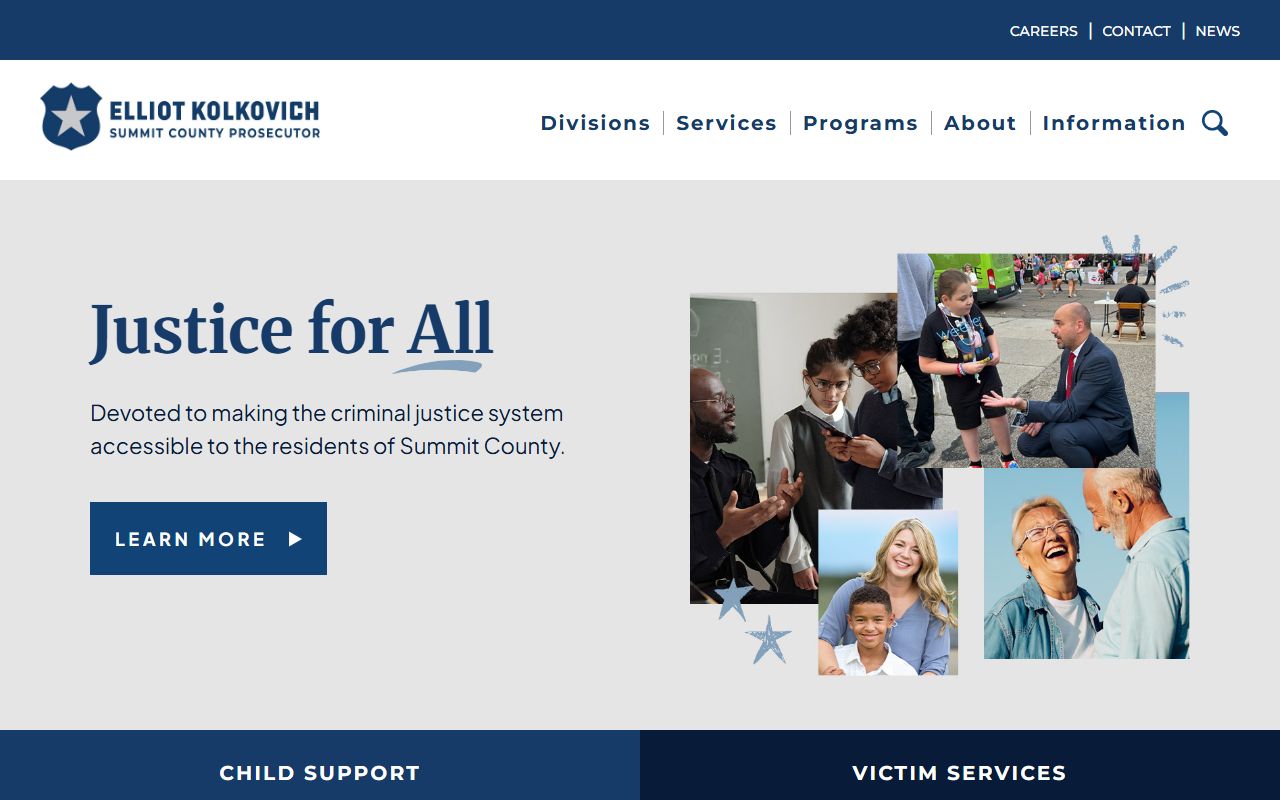
The Summit County Prosecutor handles felony cases committed in the county and keeps its own records apart from the courts. This office is not the Clerk and not the Sheriff, so requests for prosecutor files go straight to the Prosecutor. The current prosecutor is Elliot Kolkovich, elected to a full term by Summit County voters in November 2024. The screenshot below comes from the Summit County Prosecutor homepage.
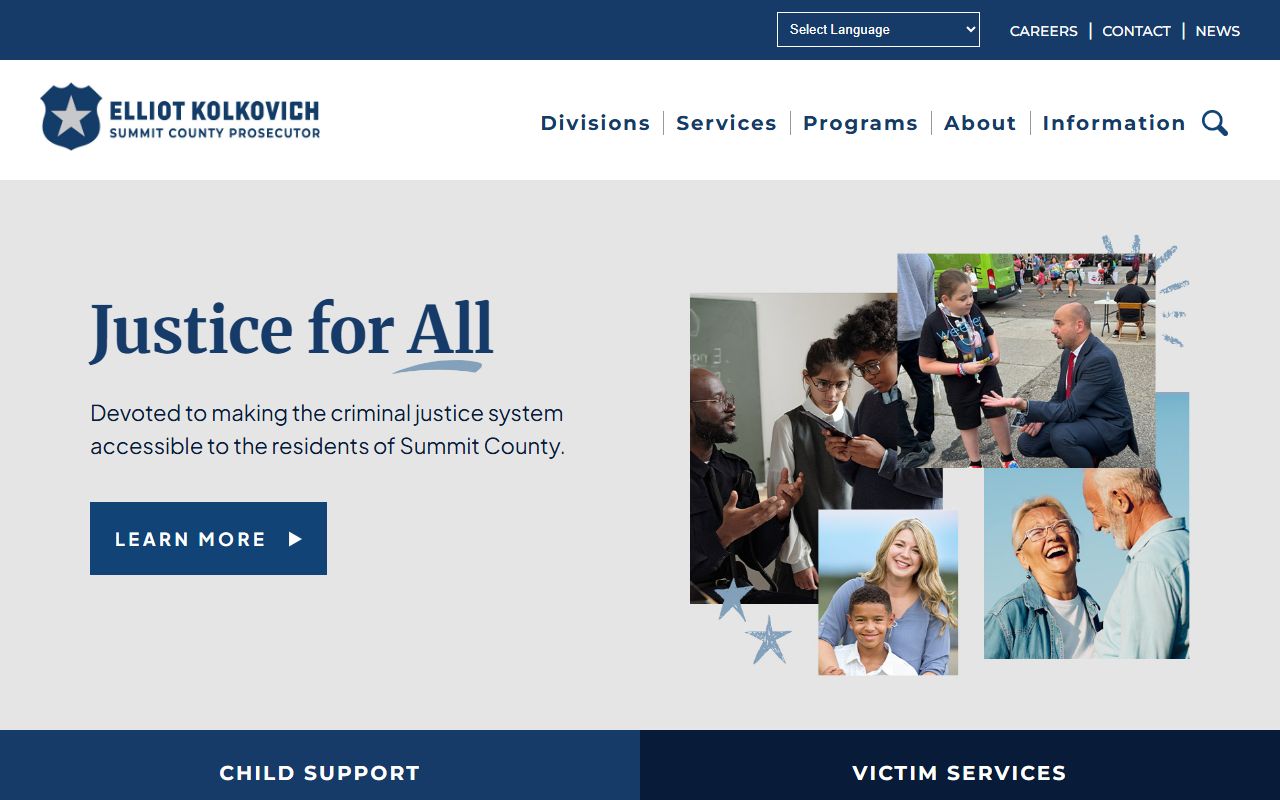
The office posts news and reform updates on its public homepage. Those pages help you see what the Prosecutor does before you ask for a file. The next image is the office's news homepage.
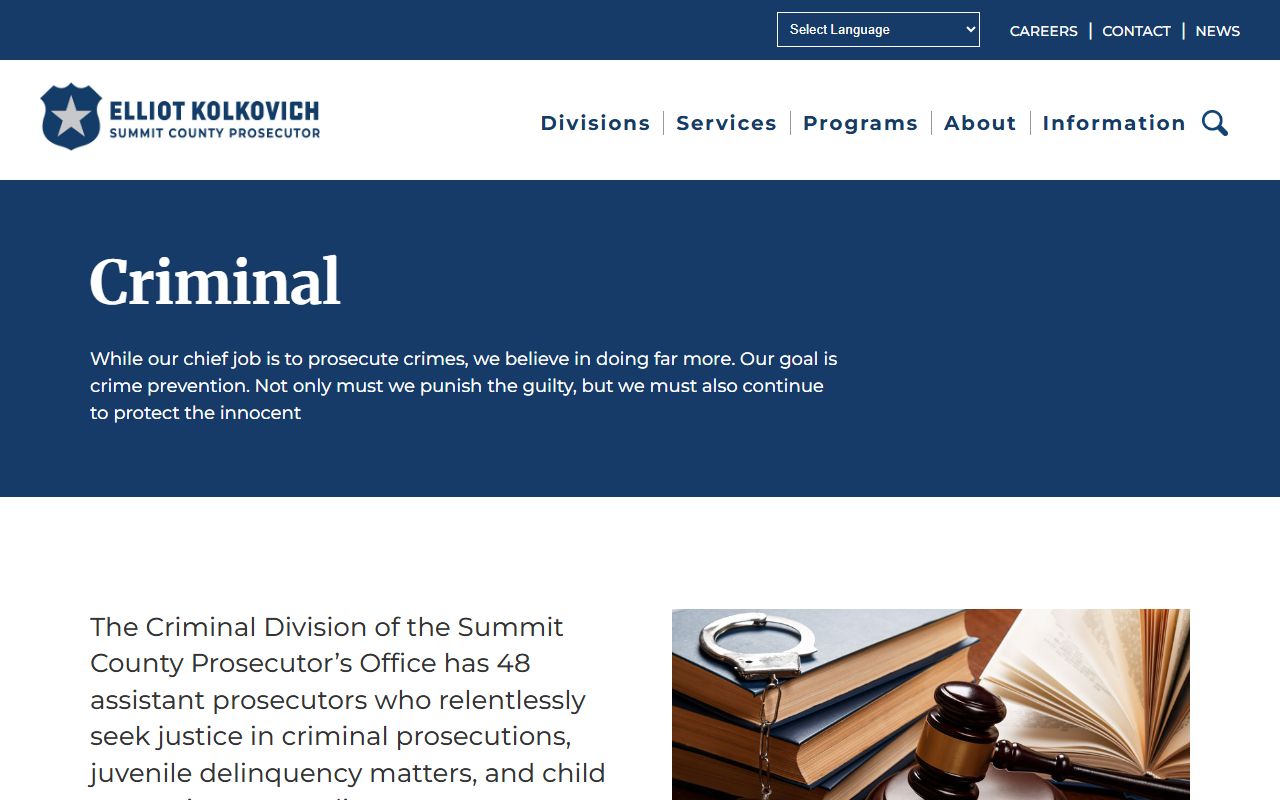
Most prosecutor records connect to a criminal court case. The Criminal Division handles felonies and coordinates daily with the Akron City Prosecutor's Office and Akron police on the previous day's arrests. The image below shows that Criminal Division page.
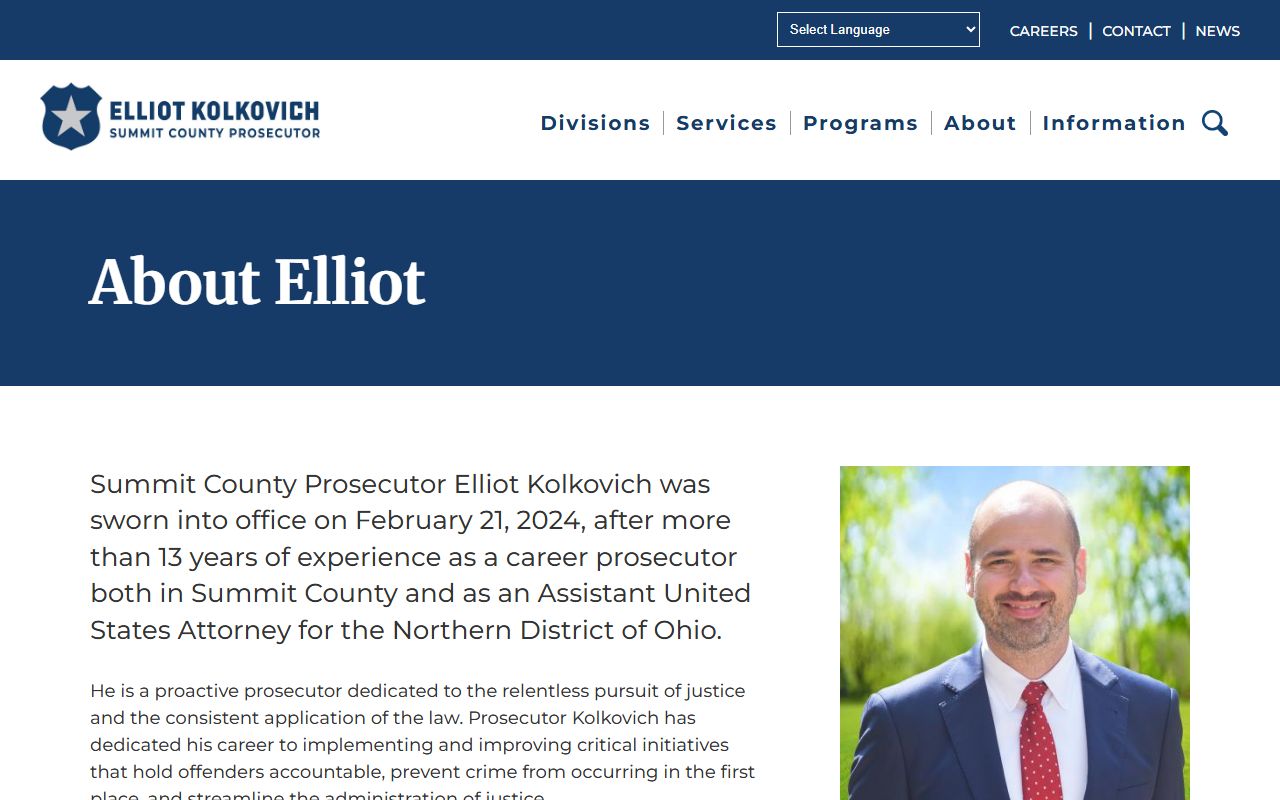
The court file for one of those cases lives with the Clerk, not the Prosecutor, so the two offices work as separate stops. For the case docket and filings, use court records or the criminal records page. The prosecutor's biography page explains who runs the office and how the role grew. It appears below.
Jail and arrest records are a third path. Those are sheriff records, not court or prosecutor files. For custody details, use inmate records. Knowing this split keeps each request pointed at the office that can answer it.
Records That Are Redacted or Restricted
Open access has limits. Ohio law and court rules close or trim several record types. The Clerk strips personal identifiers from public court files before release. Other categories stay sealed by statute. The list below shows what is commonly held back.
- Social Security numbers and bank numbers with access or security codes.
- Victim names and addresses in criminal proceedings.
- Juvenile court records, which are restricted under Ohio juvenile law.
- Sealed or expunged adult criminal records under Ohio Rev. Code § 2953.32 and § 2953.33.
- Adoption files and mental-health proceedings, both confidential.
- Protected addresses and safety details in domestic violence and protection-order files.
Sup.R. 45 sets the redaction rules for court records and presumes public access to the rest. A sealed case should not appear in an ordinary Clerk search at all. If you think a record exists but cannot see it, the path depends on the file. Only the court that handled a sealed case can grant access, and only on proper grounds.
Note: a redacted public copy hides protected fields, so a record can be public yet still leave out a Social Security number or a victim's address.
How to Narrow a Request
A tight request gets answered faster. A vague one, like "all records on a person," can be returned for clarity rather than filled. The more you can pin down, the quicker staff can pull the file. A few details do most of the work.
- Give the exact case number when you have it. For court files, search first, then paste it in.
- Add the file date and the names of the parties.
- Name the record type you want, such as a judgment entry or a docket printout.
- Set a date range so staff are not searching decades of files.
- Pick the delivery method up front so the office knows how to send it.
If your request is broad, expect the office to ask you to narrow it. That is normal under Ohio law and is not a denial. A clear, specific request is the single best way to cut the wait and the cost.
If Your Request Is Denied
Sometimes an office withholds a record or says no. Under the Public Records Act, the office should give a reason and point to the legal basis. If you disagree, you have options. For ordinary public records, Ohio Rev. Code 149.43 lets a person enforce access through a court action, and the law allows statutory damages and attorney fees in proper cases.
Court-record restrictions work differently. Under Sup.R. 45, access to a court file can be restricted by a judge or court order. To challenge or undo that, you usually file a motion in the court that handled the case. The Ohio Attorney General's Sunshine Laws materials explain the public-record route in plain terms, but the Attorney General does not act as the Clerk for local court files. When in doubt, ask the office that holds the record which path applies.
Summit County Clerk Records Contact
For court case files, the Clerk's Legal Division is the office to call. Its counter sits in the courthouse annex in downtown Akron, and its e-filing portal runs around the clock even when the counter is closed. The contact card below lists the Legal Division details for a public records request.
Clerk of Courts, Legal Division
205 S. High Street
Akron, OH 44308
330-643-8082
Mon-Fri 7:30 a.m.-4:00 p.m.
The current Clerk of Courts is Tavia Galonski. The office takes court-record requests through its online form, by email, by mail, or in person. It warns the public to use only its official site, clerkweb.summitoh.net, after a fake site copied its name. For more on the office and its duties, see the Clerk of Courts page.