
How to Search Summit County Court Records
Most Summit County court records are held by the Summit County Clerk of Courts. The clerk runs a free public case index that covers the Court of Common Pleas General Division, the Domestic Relations Court, and the Ninth District Court of Appeals. There is no charge to look, and you do not need an account. You do need to know which kind of case you want, because the index is split by division rather than offered as one big all-case search.
Before you start, gather a few things. A full name helps, and a case number helps even more. The clerk warns the public to use only its official site. In 2026 the office reported a fake website that copied its name, so the safe path is to begin at the clerk's own division selector.
The official records search opens on a "Search For Cases" page that lists each division you can enter. The screenshot below comes straight from the Summit County Clerk of Courts case search.
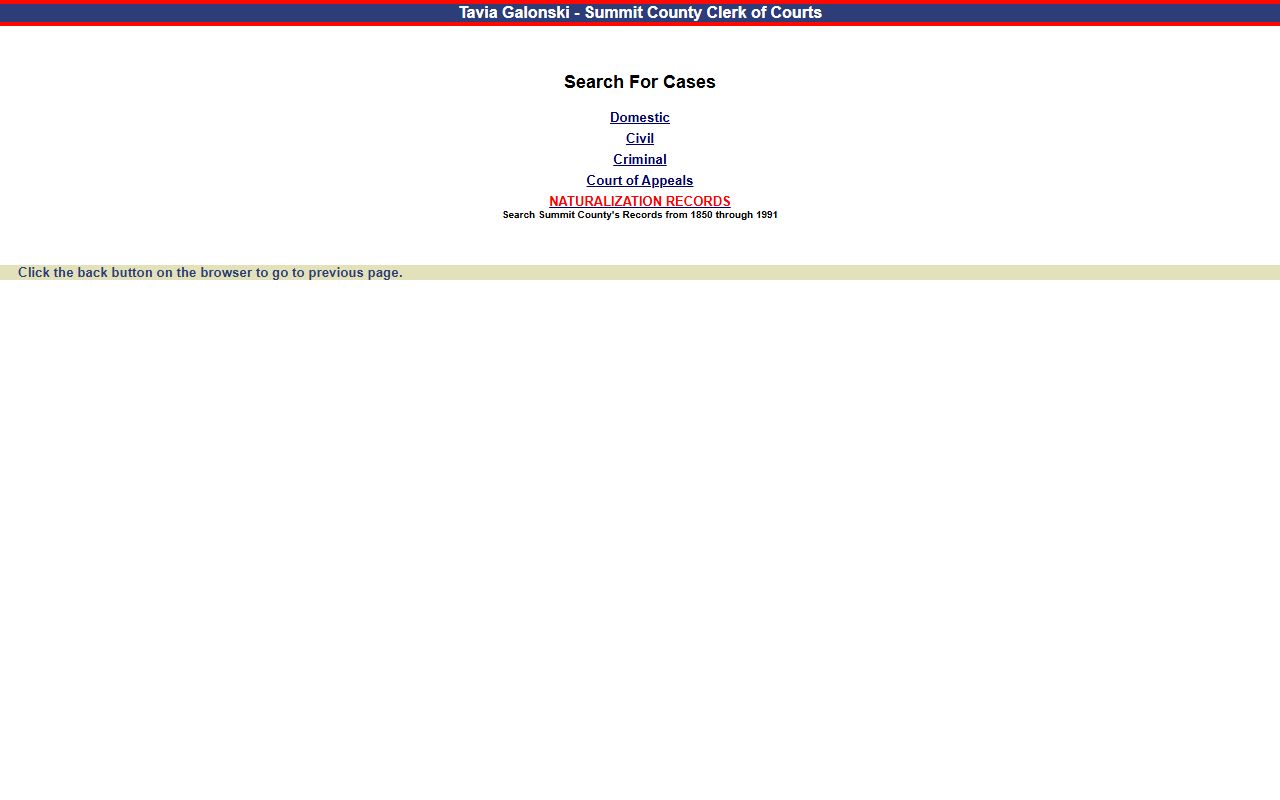
Naturalization records on that menu reach back to 1850 through 1991, a nice touch for family history work. For everyday case searches, follow these steps.
- Open the official clerk division selector and pick the division that fits your case: Civil, Criminal, Domestic, Court of Appeals, or Naturalization.
- Choose a search type. You can search by name, by case number, by commercial name, or by a mixed search using date, judge, case type, and document type.
- If you search by name, enter at least the first two letters of the last name for civil cases and at least the first three for criminal cases.
- If you search by case number, keep the division format. A civil case looks like CV 1999-01-0001, and a criminal case uses CR with three numeric parts.
- Open the case to read its docket, then request a certified copy from the clerk if you need an official version.
If the session times out, the page shows a "Session Expired" notice. Just go back to the division selector and start again. The clerk recommends online access for records from 2002 to the present and a public records request for anything older.
The Summit County Judicial System
Ohio builds its trial courts around the Court of Common Pleas, and Summit County is no different. The General Division hears felony criminal cases, major civil suits, foreclosures, and administrative appeals. Three more divisions handle the rest: Domestic Relations for divorce and family matters, Juvenile Court for youth cases, and Probate for estates and marriage licenses. Above the trial courts sits the Ninth District Court of Appeals, with the Supreme Court of Ohio as the court of last resort.
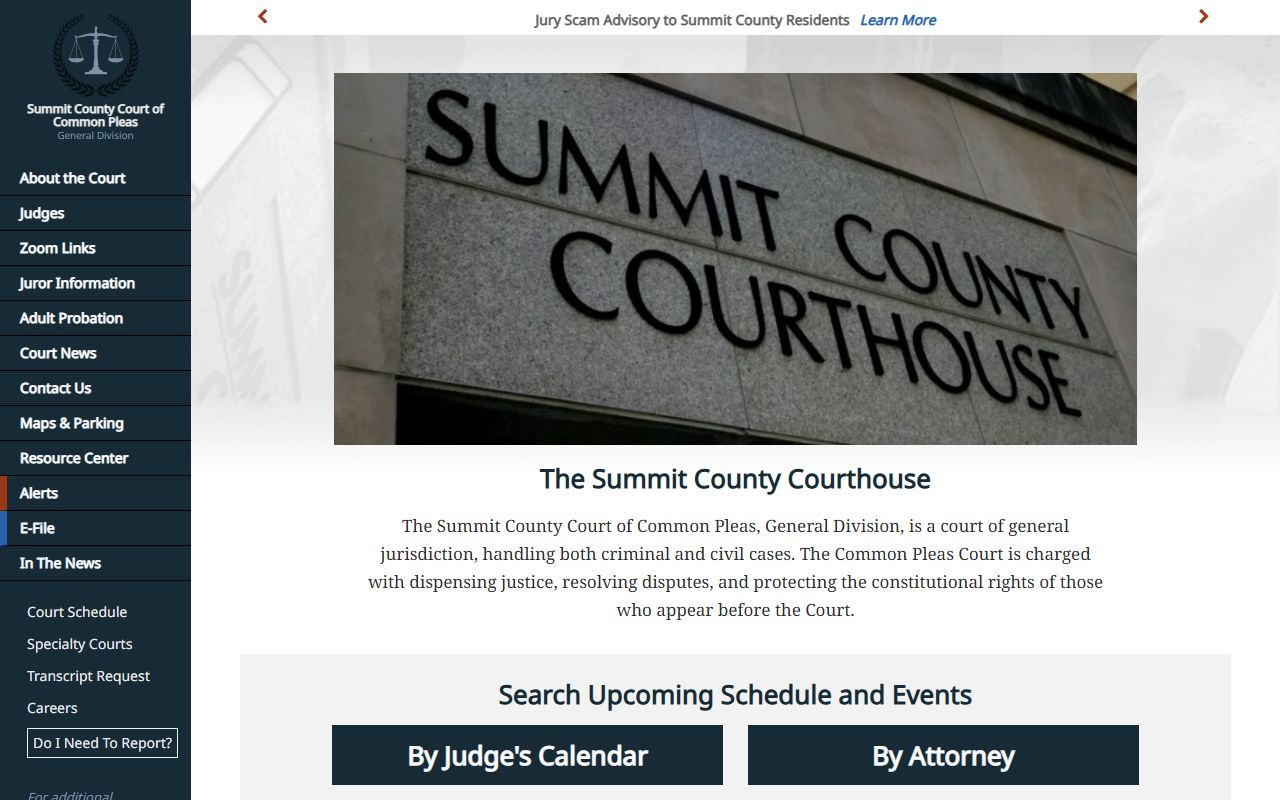
Below Common Pleas, the county's municipal courts handle most misdemeanors, traffic tickets, small claims, and the early stages of felony cases. The General Division court site explains its own operations, judges, and programs. The screenshot below is the Summit County Court of Common Pleas General Division homepage.
A felony case usually moves through the system like this:
Case flow: Municipal Court › Court of Common Pleas, General Division › Ninth District Court of Appeals › Supreme Court of Ohio
| Court | Jurisdiction | Case Types |
|---|---|---|
| Common Pleas, General Division | General trial court | Felony criminal, major civil, foreclosure, administrative appeals |
| Domestic Relations | Family trial court | Divorce, dissolution, custody, support, protection orders |
| Juvenile Court | Youth and family | Delinquency, dependency, abuse, neglect, juvenile traffic |
| Probate Court | Estates and family probate | Wills, estates, guardianships, adoptions, marriage licenses |
| Municipal Courts | Limited jurisdiction | Misdemeanors, traffic, small claims, preliminary felony hearings |
| Ninth District Court of Appeals | Intermediate appeals | Appeals from Summit County trial courts |
Ten judges preside over General Division work, and the court hears more than 1,600 cases a year. Because each division keeps its own records, the first job in any search is to match the case to the right court.
Summit County Courthouses
The main courthouse complex sits in downtown Akron. The General Division is at 209 South High Street, while the Clerk Legal Division and the Domestic Relations Court use the courthouse annex next door at 205 South High Street. Juvenile Court runs from its own building on Dan Street, and the jail is a short drive away on East Crosier Street. Hours and entrances differ by office, so it helps to confirm the address before a visit.
Clerk of Courts, Legal Division
205 S. High Street
Akron, OH 44308
330-643-8082
The Clerk Legal Division opens at 7:30 a.m. on weekdays, a bit earlier than the courts it serves. Its e-filing portal runs around the clock, even when the counter is closed.
What the Summit County Clerk of Courts Does
The Clerk of Courts is the filing and recordkeeping office for the courts it serves. The current clerk is Tavia Galonski. The office has two divisions. The Legal Division keeps the case records for the Common Pleas General Division, the Domestic Relations Court, and the Ninth District Court of Appeals. The Title Division and Passport Acceptance Agency handles vehicle and watercraft titles plus passport service at three locations around the county.
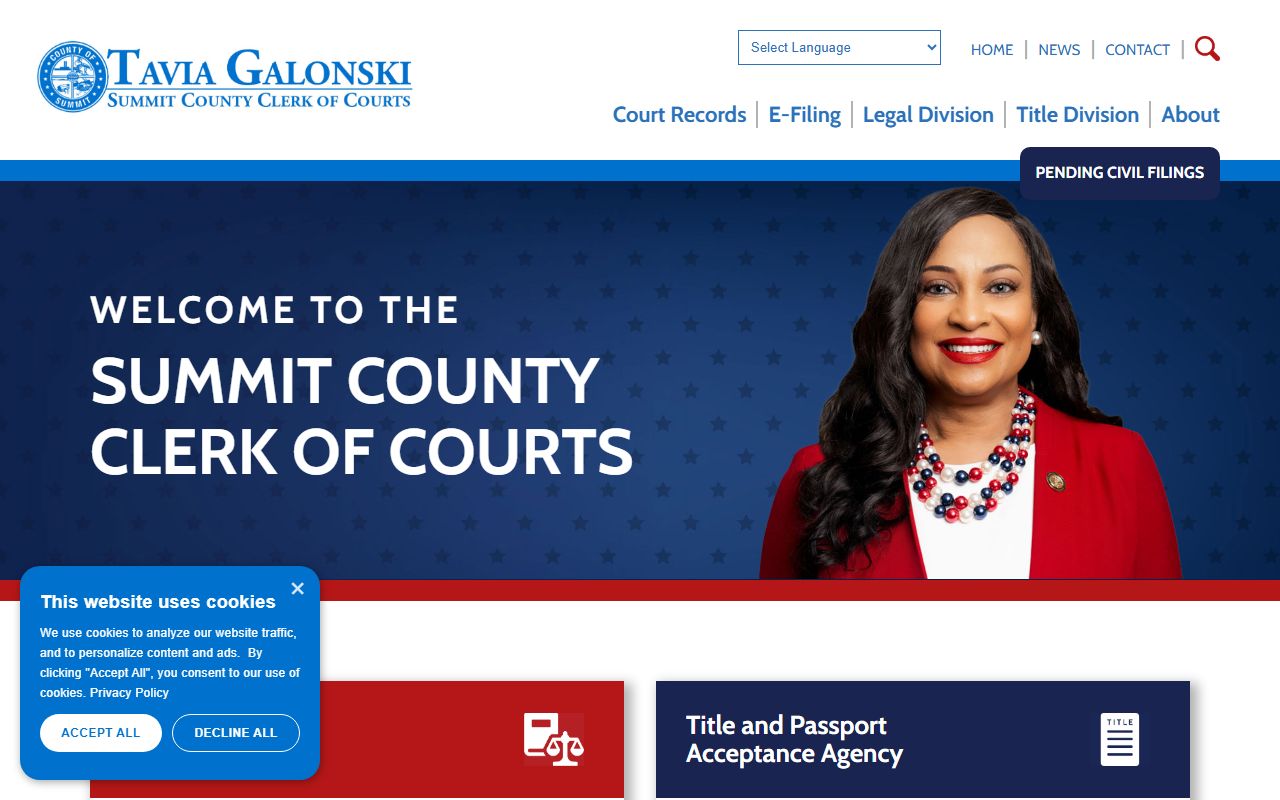
The clerk does not decide cases. Judges do that. The clerk takes filings, keeps the docket, issues certified copies, and answers public records requests. The image below shows the official Summit County Clerk of Courts homepage.
The office takes records requests through an online form and warns that it does not take online payments of any kind. That warning matters. It is a clear sign that any site asking for card details to "unlock" Summit County records is not the real clerk.
Types of Court Records Available in Summit County
The county produces many kinds of court records, and they do not all sit in one place. Civil and criminal Common Pleas files go through the Clerk Legal Division. Family files run through Domestic Relations. Estates and marriage records belong to Probate, and most traffic and minor cases stay in municipal court. Knowing the type points you to the right office.
Here are the main record types you may find:
- Civil records cover lawsuits, foreclosures, judgment liens, garnishments, and money disputes filed in the General Division.
- Criminal records cover felony cases, including indictments, bond entries, pleas, and sentencing.
- Family and divorce records cover divorce, dissolution, custody, support, and protection orders through Summit County divorce records.
- Probate records cover wills, estates, guardianships, and adoptions through the Probate Division.
- Traffic records cover citations, fines, and dispositions, usually in a municipal court.
Jail and arrest information is separate again. The Summit County inmate roster is a sheriff's report, not a court file, though the two can connect through charge statutes and case numbers.
What Summit County Court Records Show
A court record is built from the case number plus the events that follow it. The clerk's search forms and docket lists point to the fields most files carry. Some entries are simple, like a filing date. Others, like a judgment entry, decide the whole case. The table below sums up the common fields and what each one tells you.
| Field | What It Shows |
|---|---|
| Case Number | The unique case ID, such as CV 1999-01-0001 for civil or a CR number for criminal. |
| Filing Date | The date the case began, searchable by month or day. |
| Parties | Plaintiff and defendant in civil cases; the State of Ohio and the defendant in criminal cases. |
| Judge | The assigned judge or magistrate handling the case. |
| Docket Entries | Each filing or event, such as a motion, order, summons, or service return. |
| Disposition | The outcome, such as a judgment, dismissal, plea, or sentence. |
Note: the clerk redacts non-public details such as Social Security numbers and the names and addresses of crime victims, so a public record may not show every field.
Public Access Laws for Summit County Court Records
Court records in Ohio are open by default, but two sets of rules govern access. The Ohio Public Records Act gives any person the right to inspect and copy government records. For court files, the Supreme Court of Ohio Rules of Superintendence take the lead. The clerk applies those rules to court records, except for cases that began before July 1, 2009, which fall under the Public Records Act. Some categories, like juvenile and sealed files, stay closed.
Key Statutes:
Ohio Rev. Code § 149.43 is the core public records statute. It defines public records, sets copy rules, and lets people enforce access in court.
Ohio Rev. Code § 2953.32 governs sealing and expungement of convictions, so a sealed case may not appear in ordinary search results.
Ohio Constitution Article IV, § 4 establishes the courts of common pleas and their probate divisions in each county.
The Ohio Attorney General also publishes plain-language Sunshine Laws guidance that explains how the Public Records Act works statewide. For court files, though, start with the court rules and the clerk.
Records That Are Restricted or Confidential
Open access has limits. Several record types are closed or heavily redacted under Ohio law. Juvenile court files are restricted by statute and usually reach only parties, counsel, agencies, or someone with a court order. Adoption and mental-health files are confidential. Sealed and expunged adult criminal records should not show up in a normal clerk search at all.
If you believe a record exists but cannot see it, the path forward depends on the record. For a sealed case, only the court that handled it can grant access, and only on proper grounds. For a redacted public file, you can still request the unredacted document if you qualify, such as an attorney acting for a client. When in doubt, ask the clerk division that holds the file.
Specialty Courts in Summit County
The Court of Common Pleas runs several problem-solving dockets that pair court supervision with treatment. The official specialty courts page lists the Turning Point Program, the Domestic Violence Court, Reentry Court, Valor Court, and HOPE Court. Valor Court is the county's veterans treatment court, built around judicial review, treatment planning, and veteran-specific services. The Domestic Violence Intervention Court focuses on accountability and treatment rather than punishment alone.
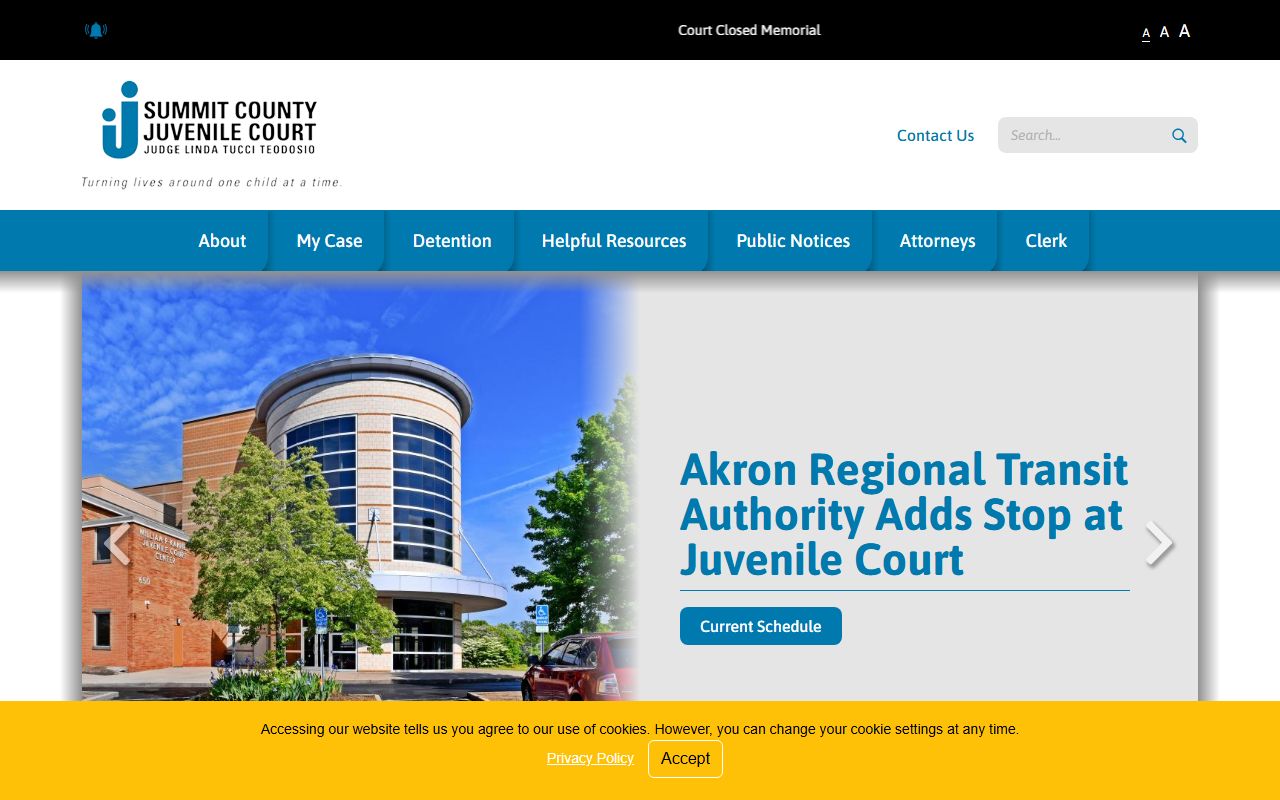
Juvenile Court runs its own certified specialized dockets and highlights reform work such as JDAI and Deep End Reform. The court describes Summit County as one of three Ohio counties expanding reform to the deep end of juvenile justice. The screenshot below is the Summit County Juvenile Court site.
In March 2026, one of the court's specialized dockets received state recertification, a sign these programs stay active and reviewed.
Summit County Sheriff and Jail
The Summit County Sheriff's Office runs the county jail and serves warrants and civil process. Sheriff Kandy Fatheree leads an office of more than 500 deputies, special deputies, and civilian staff. The jail on East Crosier Street holds up to 671 inmates and runs every hour of every day. It was the first large county jail in Ohio to use a direct-supervision model, where deputies work inside the housing units.
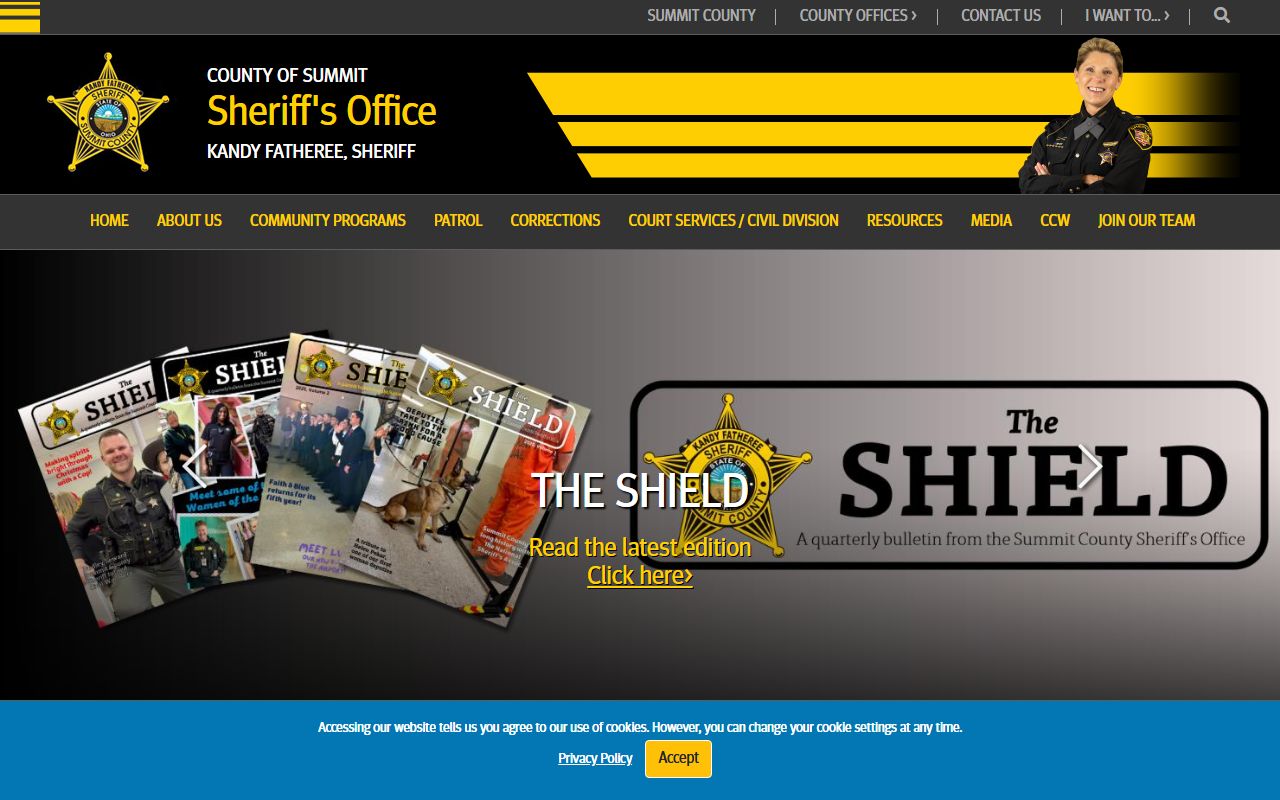
The sheriff publishes a current inmate roster and a set of inmate services. The image below shows the official Summit County Sheriff's Office homepage.
For full custody details, see Summit County inmate records. For outstanding warrants, the warrant search page explains how to verify safely.
Marriage, Divorce, and Probate Records
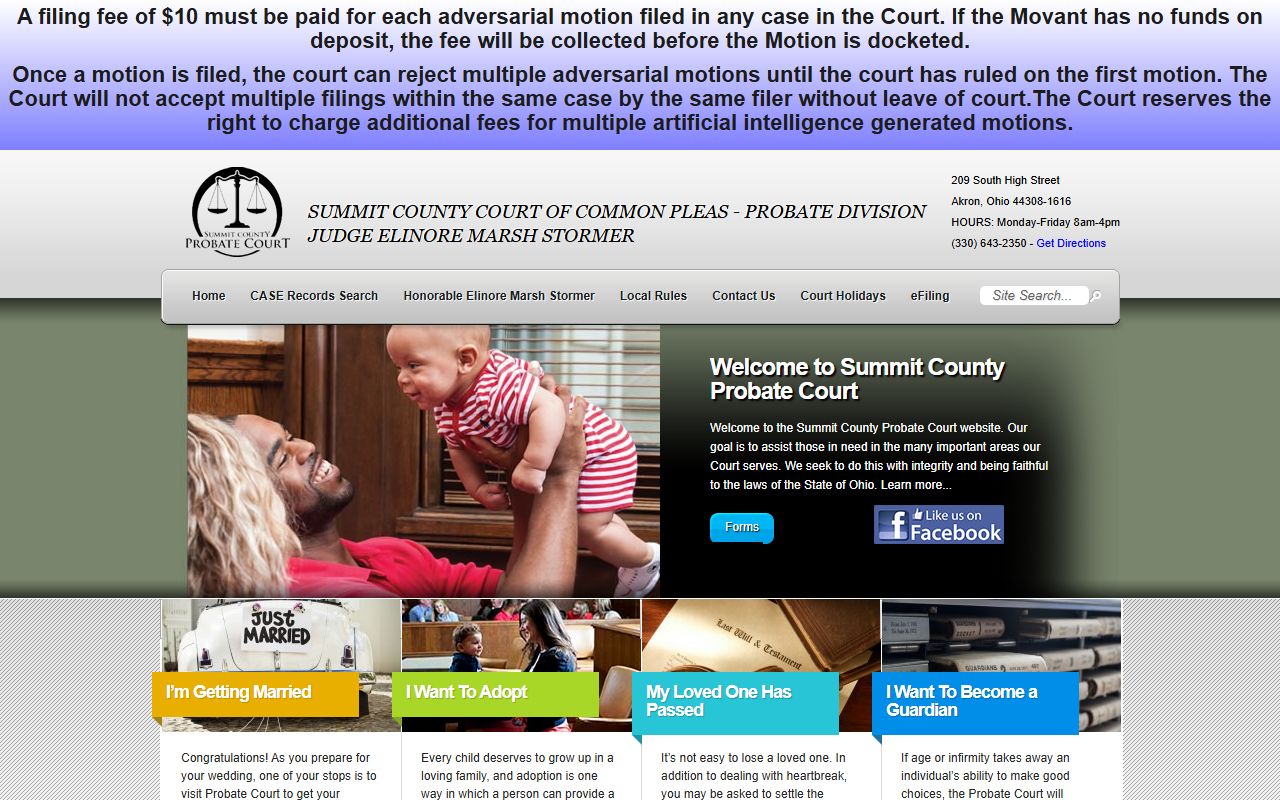
In Ohio, marriage licenses come from the probate court, and Summit County is no exception. The Probate Division issues licenses and keeps marriage records along with wills, estates, guardianships, and adoptions. Divorce is separate. The Domestic Relations Court has sole power over divorce, dissolution, and annulment, plus custody, support, and protection orders. The image below is the official Summit County Probate Court site.
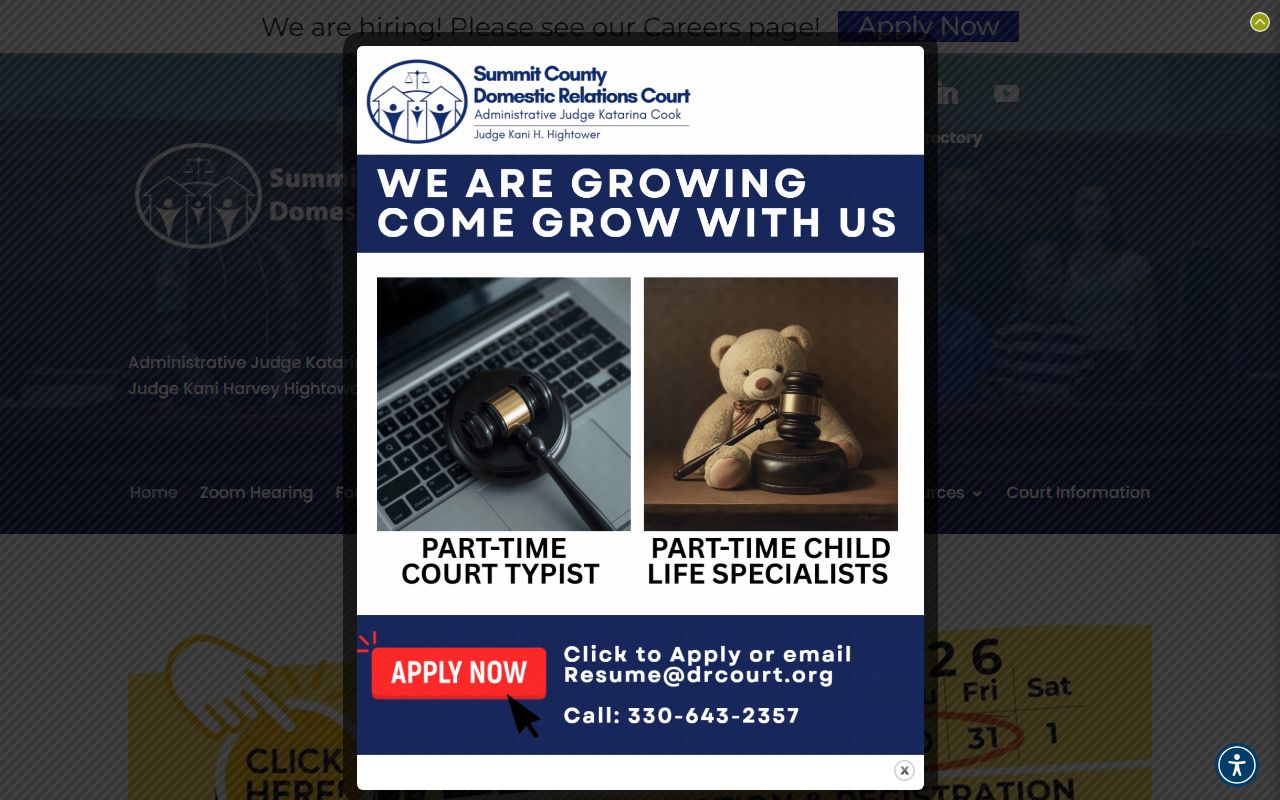
For the family side of these records, the Domestic Relations Court offers self-help checklists for people without a lawyer. Its homepage appears below.
A few probate terms come up often:
- Testator
- The person who made a will.
- Executor
- The person named to carry out a will and settle the estate.
- Guardian
- A person the court appoints to act for someone who cannot manage their own affairs.
Read more on marriage and divorce records and probate records.
Summit County Court Records Fees
Looking at records online is free. Getting copies is not. The Clerk of Courts publishes a copy fee schedule, and the rates are modest for ordinary pages. Certified copies cost more because the clerk authenticates them. The table below lists the clerk's public records copy fees.
| Item | Amount |
|---|---|
| Copies (per page) | $0.10 |
| Computer docket printouts (per page) | $0.10 |
| Certified copies (per page) | $1.00 |
| Authentication / exemplification / triple seal | $5.00 |
| Special report requiring IT staff time | $25 per 15-minute increment |
Certified copies cannot be sent by email. The sealing process is a separate cost; the Summit County sealing packet lists a $100 filing fee for each motion in a Common Pleas case.
How to Interpret Summit County Court Records
Court records use shorthand. A docket entry is a one-line note that something was filed or happened. The actual document is separate, and you may need to request a copy to read it. A charge is not a conviction. A person can be charged, then have the case dismissed, pleaded down, or found not guilty. The disposition tells you the result.
Two dismissal terms trip people up. "Dismissed with prejudice" means the case is over and cannot be refiled. "Dismissed without prejudice" means it can come back. Words like capias and bench warrant both point to an order to bring a person to court, often after a missed hearing. If a record seems unclear, the safe move is to read the judgment entry or call the clerk division that holds the file.
Accuracy and Record Limitations
Online records are a snapshot, not the final word. Filings can lag behind the counter, and an index may not yet show a recent event. Names get misspelled, and the same person can appear under several spellings. A sheriff roster, in particular, is a point-in-time report, so it can be hours behind on a release or transfer.
Note: Always confirm details that matter, such as a court date, bond, or release, with the clerk, the court, or the jail before you act on an online record.
History of Summit County Courts
Summit County was set up in 1840, and the Sheriff's Office dates itself to the same year. The name "Summit" comes from the area's spot at the high point of the Ohio and Erie Canal, and Akron grew into the county seat and legal center. The downtown courthouse complex still centers the Common Pleas General Division on South High Street, with the clerk and domestic functions next door.
The court's reach has grown well beyond the old building. Today it covers felony criminal, major civil, foreclosure, probation, mediation, administrative appeals, and a full set of specialty dockets. On the technology side, the clerk now offers online records search and around-the-clock e-filing, while the jail uses video mug-shot imaging, electronic fingerprinting, and more than 100 cameras.
Self-Help and Legal Aid in Summit County
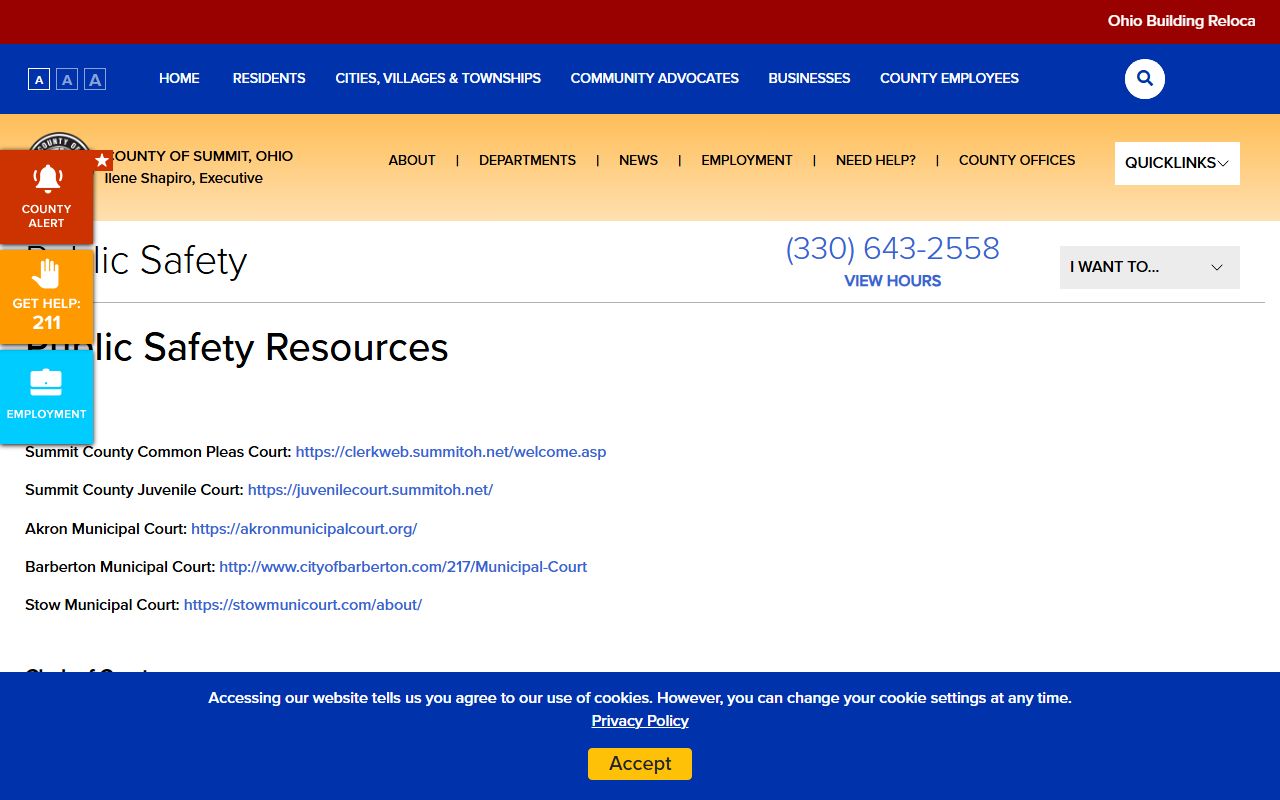
You do not have to navigate the courts alone. The Domestic Relations Court posts Information for Unrepresented Parties, with checklists for divorce, dissolution, service, and protection orders. Community Legal Aid serves low-income residents with civil matters, and the county links public defender and legal-help resources for those who qualify. The image below shows the Summit County public safety resources directory.
Court staff can explain procedure but cannot give legal advice. For that, contact a lawyer, Community Legal Aid, Ohio Legal Help, or the Akron Bar Association referral service.
Summit County Court Records FAQ
Is the Summit County records search free?
Yes. The clerk's public case search is free and does not need a paid third-party site. The clerk has warned residents about fake sites that copy its name. Use only the clerkweb.summitoh.net and clerk.summitoh.net links. Copy and certification fees apply only when you order copies.
Which court handles divorce in Summit County?
The Domestic Relations Court handles divorce, dissolution, annulment, legal separation, custody, support, and protection orders. It is a division of the Court of Common Pleas and shares the courthouse annex with the Clerk Legal Division on South High Street in Akron.
Where do I get a marriage license?
In Ohio, the probate court issues marriage licenses. Summit County applicants apply at the Probate Court and should confirm current fees and requirements directly with the office. Ohio Rev. Code 3101.05 sets the residency and venue rules for marriage license applications.
What if a case does not appear online?
Absence from the online index does not prove that no record exists. The case may be older than online coverage, filed in another division, sealed, municipal rather than Common Pleas, or indexed under a different name. The clerk recommends a public records request for records before 2002.
More answers are on the Summit County Court records FAQ page.